
The first step in any metabolic modeling project is to obtain a genome-scale metabolic reconstruction of the target microbial strain. Because most commercial strains are unique and proprietary, a draft reconstruction is commonly generated de novo from the annotated genome. Reconstruction pipelines are becoming increasingly sophisticated and can now generate draft metabolic models that immediately generate in silico growth. Due to uncertainties in the reconstruction process, draft models typically undergo multiple rounds of manual refinement to generate a high-fidelity model containing accurate descriptions of the key metabolic functions. The refined reconstruction becomes a valuable repository of strain information and constitutes a valuable piece of intellectual property. In Silico Fermentation can offer assistance in the development, refinement and testing of genome-scale metabolic reconstructions.
Draft Reconstruction
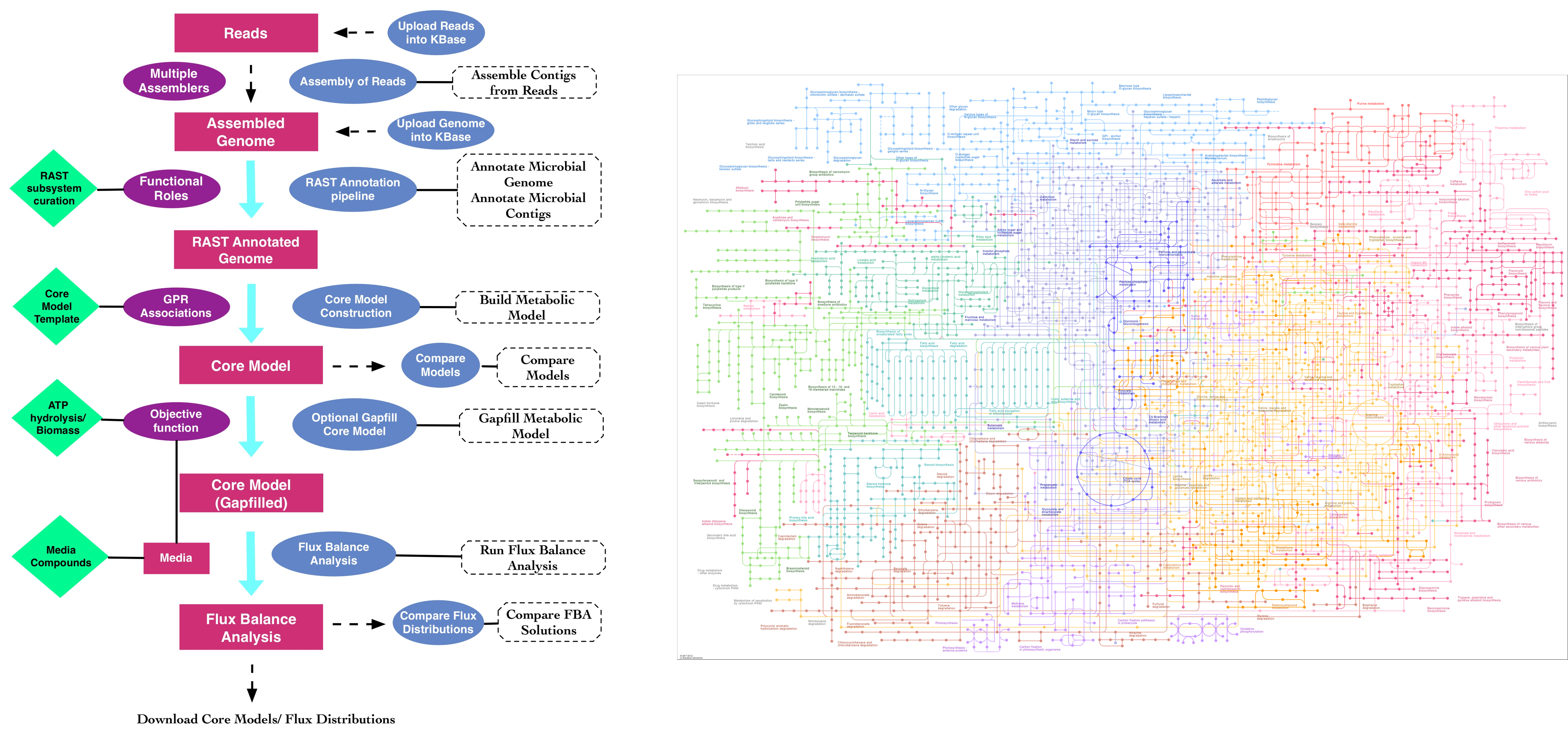
We have experience using the DOE ModelSEED and Kbase platforms for developing draft reconstructions of non-model bacterial strains with applications to biomanufacturing and human health. Both platforms are available as on-line services that require the sequenced genome data be uploaded to a DOE server for model reconstruction. Consequently, these platforms are most appropriate for academic research. For reconstruction of commercial, proprietary strains, we have experience working with the gapseq pipeline which can be installed on local computers and run by company bioinformaticians. Regardless of the pipeline used, we can assist in the draft reconstruction process by defining the metabolic pathway gap filling medium, interpreting the draft reconstruction structure, and suggesting target pathways for subsequent manual refinement.
Reconstruction Refinement
To develop a a high-fidelity reconstruction capable of accurate prediction, the draft model must undergo a manual curation/refinement process in collaboration with your strain experts. We can assist with the refinement process by identifying incomplete metabolic pathways and by investigating reconstructions of phylogenetically related organisms to find missing metabolic functions. We are currently developing the MATLAB app GEMrefine to streamline the identification and resolution of pathway gaps. Once the curated reconstruction is sufficiently advanced, we can work with fermentation engineers to design in vitro experiments for testing model predictions with respect to cellular growth rate, consumption rates of carbon sources and electron donors, and secretion rates of metabolic products.
Please reach out to discuss your reconstruction development needs.
